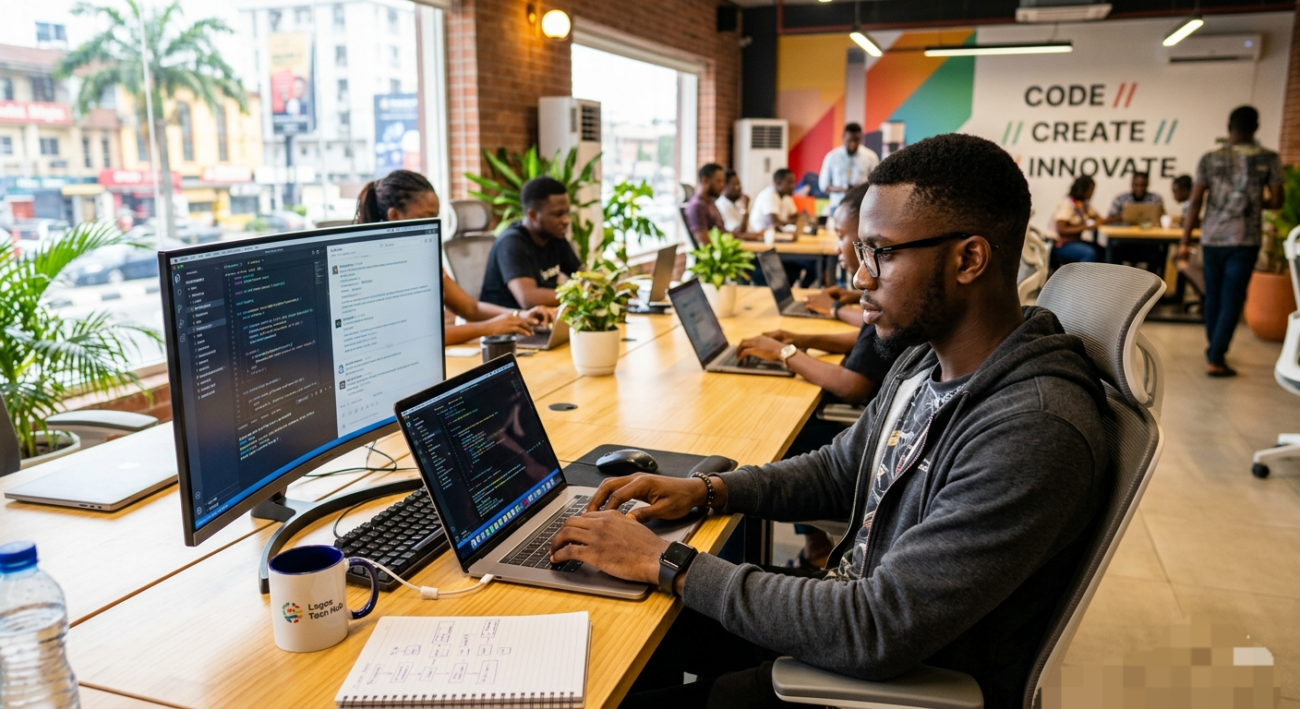
Remote work in Nigeria has completely changed how people build careers. Instead of commuting to physical offices, thousands of professionals now work for global companies from home. This shift offers a powerful way to beat inflation, escape traffic, and earn in stable foreign currencies like US Dollars.
Earning Foreign Currency
The biggest reason Nigerians seek remote work is financial. Because the local currency fluctuates, earning in Dollars, Pounds, or Euros provides immense financial security. A remote tech professional in Nigeria can earn a global salary that is much higher than what traditional local banks or companies pay.
This income difference has changed what a successful career looks like. Young graduates no longer dream of a corporate office in Lagos. Instead, they focus on building high-demand skills to land international contracts from their own living rooms.
The Infrastructure Challenge
Remote work in Western countries is relatively simple, but in Nigeria, it requires navigating local power and internet challenges. To keep an international job, workers must invest heavily in their own backup systems. This is often called a personal “infrastructure tax.
Most successful remote workers do not rely on the national grid. They set up solar panels, inverter batteries, or backup generators. They also buy data plans from multiple internet providers so they always stay connected if one network goes down. This setup is expensive to build, but it guarantees they never miss a deadline.
In-Demand Skills and Pay
Global employers look to Nigeria for specialized digital skills. The most popular roles are in technology, design, and digital operations:
- Software Developers: Building websites and mobile apps using stacks like JavaScript and Python.
- UI/UX Designers: Designing how apps look and feel using tools like Figma.
- Data Analysts: Making sense of business numbers using SQL and Excel.
- Digital Marketers: Running online ads and managing search engine optimization (SEO).
- Support Roles: Writing content, managing projects, or working as virtual assistants.
Degrees matter less in this space. Global hiring managers care about practical, real-world skills and proof of work found in online portfolios.
Getting Paid and Working Across Time Zones
Receiving money from abroad used to be difficult, but financial technology has solved this issue. Remote workers use fintech platforms like Deel, Payoneer, and Remote.com to receive their salaries securely and comply with international contract laws.
Working with global teams also means managing different time zones. A worker in Nigeria might need to adjust their daily schedule to attend meetings with teams in London, Europe, or Silicon Valley. This requires excellent communication and absolute reliability.
Top 5 High-Paying Remote Tech Skills for Nigerians in 2026 (No Coding Required)
The Rise of Hybrid Work
Not every job can be done from home. Industries like manufacturing, retail, and public services still require staff to be physically present. For offices that can adapt, hybrid work has become the popular middle ground.
Many local companies now ask employees to come to the office only two or three days a week. This hybrid model saves workers from daily traffic jams, reduces fuel costs, and improves overall productivity and job satisfaction.
Overcoming Global Hiring Biases and Compliance Barriers
Landing an international remote job from Nigeria comes with unique social and bureaucratic challenges. Many global corporations hesitate to hire directly from African countries due to perceived risks regarding identity verification, financial compliance, or generalized regional scepticism. To combat these barriers, successful Nigerian remote workers focus heavily on building an undeniable digital footprint.
To bypass structural exclusion, professionals utilize several key strategies:
- Employer of Record (EOR) Services: Utilizing platforms like Deel or Oyster allows global companies to hire Nigerians legally as official local employees or contractors, handling all tax compliances automatically.
- Global Portfolios: Presenting public, verifiable proof of work on global platforms like GitHub, Behance, or personal websites to remove any doubt about their capabilities.
- Professional Communication: Mastering crisp, asynchronous English communication to confidently handle intense, multi-stage video interview processes.
The Digital Workspace: Essential Tools for Global Teams
To fit seamlessly into distributed international teams, Nigerian professionals must master an array of digital collaboration tools. In a remote setup, proficiency with these platforms is just as important as core technical skills, as they serve as the virtual office building where all corporate communication, project management, and tracking occur.
Communication & Chat
- Slack & Microsoft Teams for real-time team text messaging.
- Zoom & Google Meet for live video conferences and alignment.
Project Management
- Jira, Linear, or Trello for tracking active tasks and software development.
- Notion & Confluence for central team documentation and knowledge management.
Because distributed teams often work across different countries, there is a heavy emphasis on documentation and clear updates. Employees are expected to log their daily progress independently, manage their own tasks on digital boards, and participate in brief video syncs. Showing high proficiency with these modern workplace tools allows a remote worker in Nigeria to operate at the exact same operational speed as a colleague sitting in a physical office in New York or Berlin.
Mental Health, Isolation, and the Work-Life Blur
While the financial rewards of remote work are massive, the lifestyle introduces unique psychological challenges that are rarely discussed in corporate spaces. Working from home permanently can lead to severe professional isolation, a lack of physical movement, and an unhealthy blur between personal life and professional obligations.
Potential Risks
- Severe screen fatigue from continuous digital device use.
- Social isolation and loneliness due to permanent home working.
- Overworking across zones to match distant global team hours.
Healthy Boundaries
- Set strict log-off times to separate work from personal life.
- Work from a distinct room to mentally detach when leaving the workspace.
- Schedule physical socializing to intentionally break the digital isolation.
Because remote workers are highly protective of their global incomes, they frequently fall into the trap of overworking. This issue is compounded when working with teams in distant time zones, leading to professionals answering emails late into the night or hopping on calls during conventional family hours. Over time, this constant connectivity triggers deep burnout. To maintain a long-term remote career, workers must learn to set strict digital boundaries, establish a dedicated workspace outside the bedroom, and intentionally schedule physical, real-world social activities to balance their digital lives.
Looking Ahead
As remote work grows, co-working spaces and solar-powered tech hubs are popping up across the country. These spaces make it easier for beginners to access good internet and electricity without spending a fortune upfront. By overcoming local infrastructure challenges, Nigerian professionals continue to prove they can compete and succeed on the global stage.