
Most startups don’t actually die from an empty bank account. Cash flow is just the final symptom. While conventional wisdom blames a lack of capital, the uncomfortable truth is much deeper. The real killers of small businesses are strategic blind spots and psychological traps that destroy a venture long before the money runs out.
When an entrepreneur blames a lack of capital, they are often misdiagnosing the problem. Capital is a magnifier. It accelerates a working model, but it also accelerates a flawed one. If the underlying mechanics of a business are broken, more money simply allows the company to fail on a larger, more expensive scale. The real reasons small businesses fail in their first year center on execution, market alignment, and leadership.
1. Misjudging Market Demand (The “Build It and They Will Come” Fallacy)
The absolute leading cause of early business failure is a lack of market needs. Entrepreneurs frequently fall in love with their own ideas, confusing personal passion with market demand.
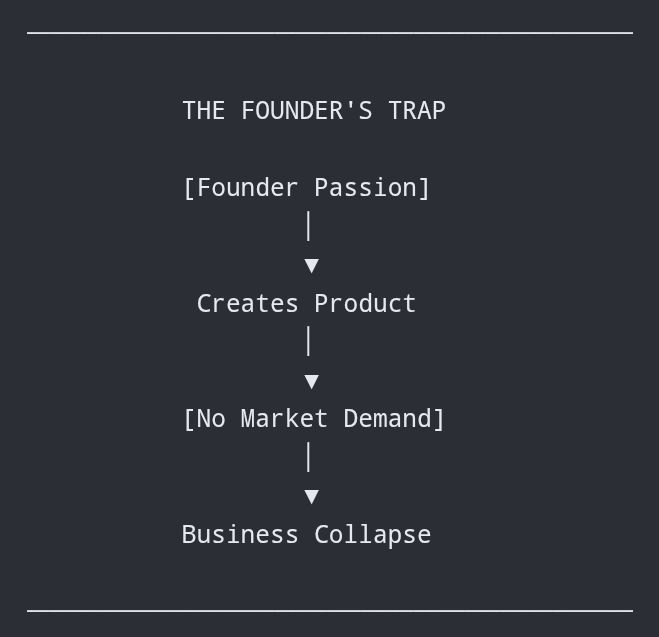
- The Echo Chamber: Founders often validate their ideas by asking friends, family, or biased groups who offer encouragement rather than honest market feedback.
- Solving Ghost Problems: Significant time and energy are spent building elegant solutions for problems that consumers do not actually care about or find important enough to pay to solve.
- Ignoring Minimal Viable Products (MVP): Instead of testing a bare-bones version of a service or product to gauge real-world interest, founders launch fully realized, expensive versions, only to find the market indifferent.
2. Flawed Revenue Models and Pricing Strategy
A business can have an excellent product and an eager audience but still collapse if the math behind how it makes money is broken. Pricing is a complex lever that requires balancing value perception with operational reality.
The Race to the Bottom
Many first-time business owners believe the easiest way to compete is on price. They undercharge to attract their first customers, creating an unsustainable precedent. This strategy attracts bargain hunters who possess zero brand loyalty and will leave the moment prices rise. Low margins leave no room for operational errors, supply chain spikes, or inflation.
Misunderstanding Customer Acquisition Cost (CAC) vs. Lifetime Value (LTV)
A mathematically terminal mistake made in year one is ignoring the relationship between what it costs to acquire a customer and what that customer spends. If it costs ₦5,000 in marketing, time, and discounts to acquire a single customer, but that customer only generates ₦4,000 in total profit before churning, the business loses money on every transaction. No amount of startup capital can fix an inverted CAC-to-LTV ratio.
Operational Incompetence and Poor Execution
An idea is worth virtually nothing without execution. Many founders are excellent technicians such as talented chef opening a restaurant or a brilliant coder, starting a software firm, but they are highly inexperienced operators.
- The Technician’s Trap: Doing the core work of the business is entirely different from managing the business itself. Loving baking does not mean you will love supply chain logistics, commercial lease negotiations, or payroll tax compliance.
- Ignoring Unit Economics: Founders often fail to track the granular costs of delivering their service or product. They look at gross revenue instead of net margins, missing the fact that delivery costs are eating away their runway.
- Poor Inventory Management: For product-based businesses, tying up all available resources in slow-moving inventory triggers severe operational gridlock, preventing the business from pivoting or funding daily operations.
3. Dysfunctional Team Dynamics and Leadership Failures
A company cannot outgrow the leadership capabilities of its founders. In the first year, internal friction, poor hiring choices, and a lack of clear vision destroy more companies than external competition ever could
Skill Gap Misalignment
Early-stage founders often try to do everything themselves to save money or maintain total control. This leads to critical bottlenecks. Conversely, when they do build a co-founding team, they frequently partner with people who share their exact same skill set (e.g., two creative designers) rather than finding a complementary partner (e.g., a creative designer paired with a strict operational manager).
Toxic Corporate Culture and Bad Hires
Hiring out of desperation rather than cultural and structural alignment is a major first-year trap. A single toxic or incompetent early employee can derail projects, destroy team morale, and burn through precious administrative hours.
4. Ineffective Marketing and Customer Blindness
Many entrepreneurs assume that if a product is high quality, customers will naturally discover it. This is a fatal misconception. In a crowded marketplace, obscurity is a business owner’s greatest enemy.
- Vague Value Propositions: If a customer cannot understand what a business sells and how it improves their life within five seconds of visiting a website or storefront, they will walk away.
- The “Everyone Is My Customer” Mistake: Failing to define a specific, hyper-targeted niche results in generic, diluted marketing campaigns. Trying to speak to everyone means speaking to no one, which burns through marketing budgets with zero conversion.
- Ignoring Existing Customer Feedback: First-year businesses often obsess entirely on chasing new customers while neglecting the early adopters they already have. Failing to listen to initial complaints or suggestions cuts off the fastest path to product-market fit.
6. The Psychology of the Founder: Burnout and Egos
The emotional and psychological toll of entrepreneurship is immense. The collapse of a young business is frequently caused by the mental surrender or strategic stubbornness of the person running it.
Incapacity to Pivot
When early market data contradicts a founder’s vision, ego often prevents them from adapting. They double down on a failing strategy because admitting they were wrong feels like a personal defeat. Resilience is necessary, but blind stubbornness in the face of negative data is catastrophic.
Premature Scaling
Flush with early excitement or a small initial wave of success, founders often scale up too quickly. They rent expensive office spaces, invest in massive marketing campaigns, or hire a large team before establishing a stable, repeatable sales process. This artificial expansion creates massive overhead that crushes the business the moment a minor market dip occurs.
Founder Burnout
The relentless 80-hour workweeks, chronic stress, isolation, and lack of boundaries take a heavy toll. When the founder’s mental and physical health degrades, decision-making becomes impaired, leading to critical strategic errors that ultimately sink the enterprise.
Strategic Framework for First-Year Survival
To avoid becoming a statistic, early-stage entrepreneurs must shift their focus away from fundraising and toward building a highly resilient operational foundation.
- Validate Before Building: Never invest significant capital into an unproven concept. Use landing pages, pre-sales, manual consulting offers, and interviews to confirm that customers are willing to pay for your solution.
- Master the Unit Economics: Know exactly how much it costs to produce, package, market, and deliver a single unit of value. Ensure your margins can comfortably absorb market volatilitym
- Build Complementary Teams: Acknowledge your personal weaknesses. If you are a visionary creator, hire or partner with a meticulous systems administrator and a numbers-driven accountant early on.
- Dominate a Narrow Niche: Win a tiny, hyper-specific segment of the market first. It is far safer and more profitable to be everything to a small group of passionate users than to be a mediocre, unnoticeable option to a broad population.
- Embrace Agility Over Ego: Treat your initial business plan as a series of unproven hypotheses. Look at market feedback and sales data objectively. Be ready to change direction, adjust your pricing, or alter your product line the moment data proves your assumptions wrong.