The Point of Sale (POS) business has become one of Nigeria’s most lucrative retail banking sectors. Acting as human ATMs, POS agents bridge the gap between traditional banks and underserved communities. With low startup costs and high daily cash turnover, this business offers a reliable path to steady daily profits if executed correctly.
Step 1: Conduct Location Research and Feasibility
Your choice of location dictates 90% of your business success. You need high foot traffic combined with a lack of immediate banking alternative.
Prime POS Locations
- Busy Marketplaces: Open-air markets, commercial plazas, and shopping hubs.
- Transportation Hubs: Major bus terminals, parks, and train stations.
- Underserved Neighbourhoods: Areas with constant power outages or a total lack of bank ATMs.
- School Environments: Near university campuses, polytechnics, or large boarding schools.
- Competitor Assessment: Look for gaps where existing operators run out of cash or suffer from poor network connections.
Step 2: Estimate Startup Capital and Budgeting
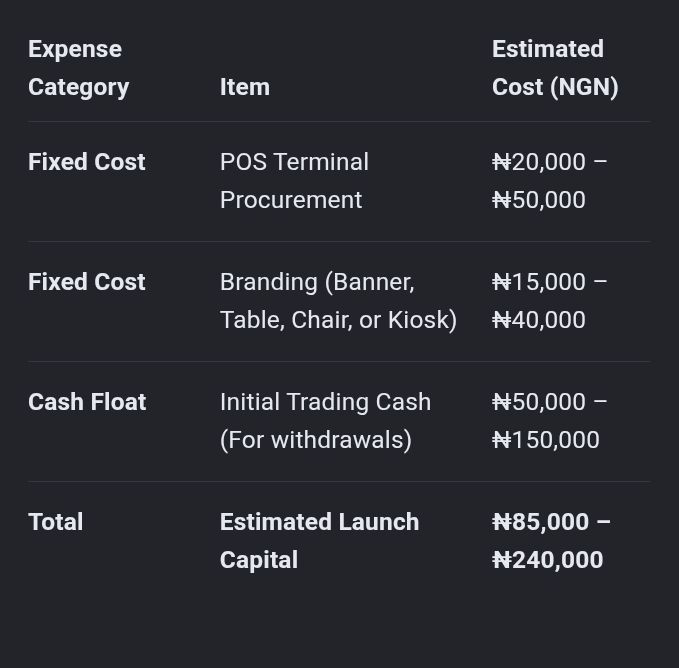
You can launch a standard POS business with ₦100,000 to ₦250,000. The capital splits into fixed setup assets and a fluid cash reserve.
Step 3: Choose a Reliable POS Service Provider
Do not choose a provider based on terminal price alone.Prioritize network stability and fast dispute resolution. Frequent “dispense errors” will ruin your customer loyalty.
Top POS Networks in Nigeria
- Moniepoint Terminal:Renowned for high network stability, fast dispute resolution, and instant settlement.
- OPay Terminal:Offers competitive transaction commissions and a very user-friendly mobile application interface.
- Palmpay Terminal:Provides affordable terminal options and frequent promotional incentives for active agents.
- Kuda / Carbon: Good alternatives with low transaction fees tailored for small business integration.
Step 4: Register Your Business & Meet
- Requirements:While some fintech companies allow you to operate under a personal name, formalizing your business builds trust and protects you legally.
- Key Compliance Requirements:CAC Registration: Register a business name with the Corporate Affairs Commission (CAC) to get an official certificate.
- Identification Documents: Keep a valid Government ID (NIN, Voter’s Card, or International Passport) and your BVN ready for tier-upgrade KYC validation.
- Passport Photographs: Required for physical agent documentation by your merchant bank or fintech provider.
Step 5: Structure Your Pricing and Profit Model
POS operators earn money through flat fees or percentage cuts on transactions. Structure your pricing to balance profitability with local competitiveness.
Standard Pricing Blueprint
Withdrawals (₦1,000 – ₦5,000): ₦100 service charge.
Withdrawals (₦5,000– ₦10,000): ₦200 service charge.
Deposits / Transfers: Flat ₦100 to ₦200 fee depending on the transaction volume.
Value-Added Services: Charge an extra ₦50 to ₦100 for processing utility bills (DSTV, Nepa bills, WAEC tokens).
Step 6: Set Up Security and Risk Management
Because you handle physical cash every day, POS businesses are primary targets for petty thieves and sophisticated scammers.
Security Best Practices
- Never Disclose PINs: Keep your terminal transaction PIN completely hidden from customers and onlookers.
- Fake Alert Awareness: Always verify incoming funds via your official terminal wallet balance or bank app statement, never via a customer’s SMS screenshot.
- Secure the Cash: Do not stack visible cash on your workspace; utilize a secure, locked cash box or a deep drawer.
- Set Closing Boundaries: Avoid operating late into the night in poorly illuminated areas.
Step 7: Select and Secure Your Shop Structure
Your physical setup directly impacts your safety, visibility, and operational comfort. Choose a structure that fits your budget and security needs.
- Umbrella & Table Setup: Cost-effective and highly mobile, but offers zero protection from weather or theft.
- Wooden Kiosk: Low cost, provides basic shelter, and allows you to lock away non-cash branding items overnight.
- Iron Container / Caged Booth: The safest option, featuring a metal mesh barrier that prevents customers from reaching your cash or terminal.
- Co-Locating in an Existing Shop: Partnering with an active pharmacy, grocery store, or salon splits rent costs and leverages their existing foot traffic.
Step 8: Master Cash Flow and Float Management
Running out of cash mid-day halts your business and drives customers to competitors. Managing liquidity requires strict daily planning.
- Determine Your Ratio: Maintain a balanced mix of raw cash (for withdrawals) and digital wallet funding (for transfers).
- Schedule Re-Balancing Trips: Identify the closest bank ATM or commercial bank branch to quickly deposit collected cash or withdraw more float.
- Utilize End-of-Day Sweeps: Transfer your daily profits out of the main POS trading wallet into a separate personal savings account every evening.
Step 9: Offer Value-Added Services to Boost Revenue
Relying solely on cash withdrawals limits your income potential. Diversify your services to transform your stall into a complete utility hub.
- Utility Bill Payments: Process electricity tokens (IKEDC, AEDC, etc.) and cable TV subscriptions (DSTV, GOTV, StarTimes).
- Data and Airtime VTU: Sell instant network recharges; these carry small but frequent percentage commissions.
- Exam Scratch Cards: Purchase and resell WAEC, NECO, and JAMB registration pins during peak academic registration seasons.
- Cardless Withdrawals: Assist customers who forgot their debit cards by utilizing OPay/Moniepoint cardless or USSD transfer features.
Step 10:Maintain a Daily Financial Accounting Log
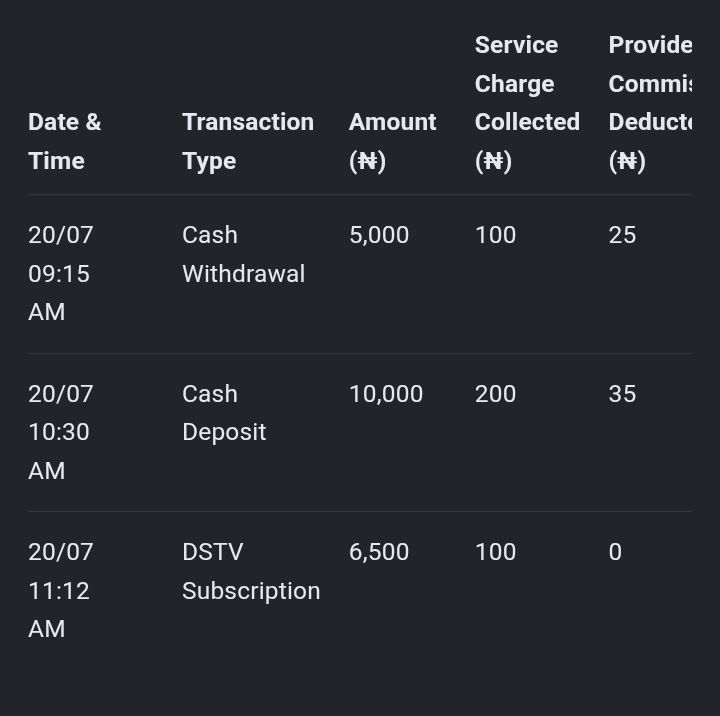
Sample Daily Log Template
Track every single naira to ensure you are operating at a true profit. Use a physical ledger book in app tools or a spreadsheet tool like Microsoft Excel or Google Sheets.
Pitfalls to Avoid
- Giving Out Cash on Credit:Never allow customers or friends to withdraw cash with a promise to pay later.
- Ignoring Network Signal Strength:Avoid choosing a provider that has zero network reception in your specific shop location.
- Neglecting Customer Relations: Treat every customer with respect; a pleasant attitude retains customers even when your network experiences slight delays.