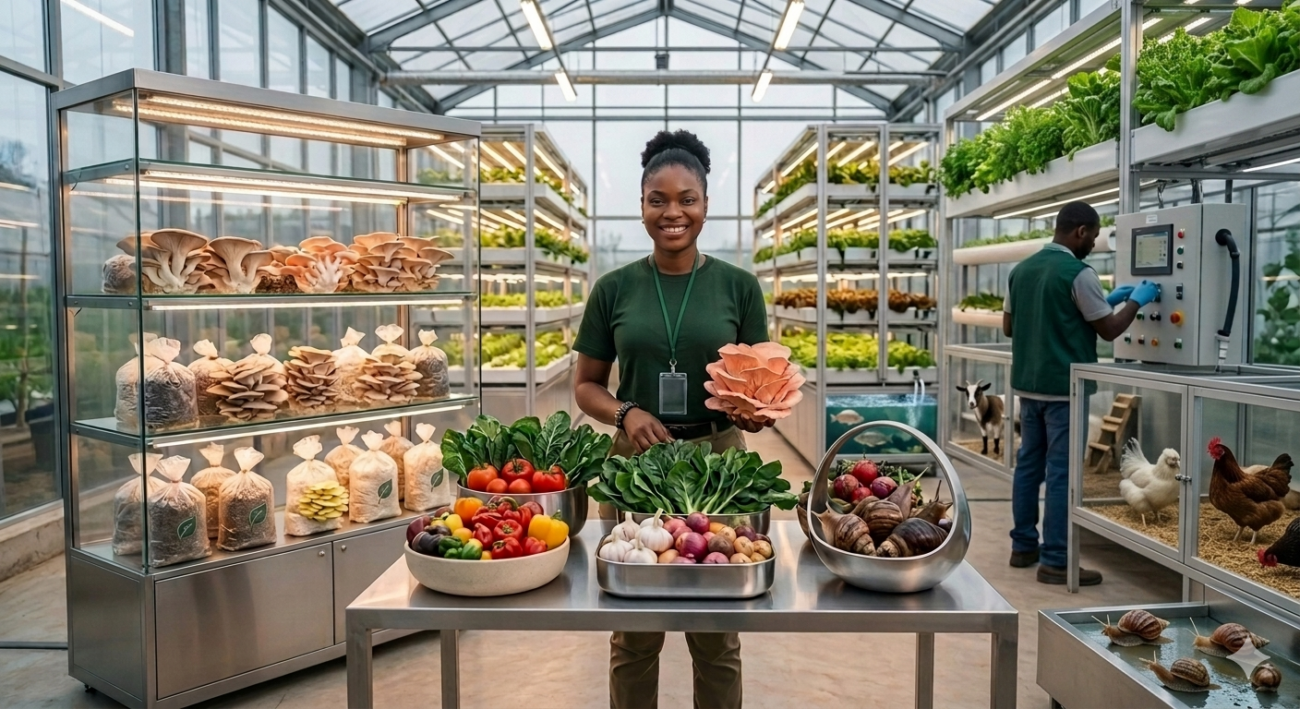
The agricultural sector is the backbone of Nigeria’s economy,employing over 35% of the total workforce. With a population exceeding 230 million people,the domestic demand for food and agro-allied products is at an all-time high.Starting an agribusiness does not require owning hundreds of hectares of land or millions of Naira in seed capital.Small-scale agricultural ventures offer high turnover,rapid growth,and low entry barriers.
Starting an agribusiness does not require owning hundreds of hectares of land or millions of Naira in seed capital. Small-scale agricultural ventures offer high turnover, rapid growth, and low entry barriers.
1. Vegetable Farming
Startup Cost: Very low (Estimated ₦10,000 to ₦30,000 for high-quality seeds, organic manure, and simple watering cans).
- High-Demand Varieties: Focus on Fluted Pumpkin (Ugu), Amaranth (Shoko/Tete), Spinach, or Chili Pepper.
- Space & Growth: You can utilize small backyard plots, empty vertical spaces, or old sacks and containers.
- Turnaround Time: Crops like leafy greens can be harvested and sold every 4 to 6 weeks.Harvest fluted pumpkin (Ugu) by cutting the stems every 2–3 weeks, allowing it to regrow repeatedly for up to 6 months.
- Pest and Disease Management: Avoid chemical pesticides for backyard farming to keep costs low and produce organic.Use natural alternatives like neem tree leaf extract mixed with water or a mild wood ash sprinkle on leaves to deter caterpillars and aphids.
- Marketing Strategy: Approach local “Market Women” (Mama Julia types) in your neighbourhood market before harvest.Offer to supply them directly at dawn so they get the freshest produce before commercial trucks arrive from the North.
2. Snail Farming (Heliculture)
Snail farming stands out because it requires minimal space, produces zero odour, and can easily run alongside a full-time job.
- Startup Cost: Low (Estimated ₦20,000 to ₦40,000 to purchase initial breeding stock and a basic wooden or mesh pen).
- Feeding Cost: Highly affordable as snails feed heavily on organic waste like fruit peels, vegetable scraps, and local leaves.
- Market Opportunity: Snail meat is an expensive delicacy bought in bulk by local hotels, bars, and urban markets,target local pepper-soup joints, Cleaned, deshelled, and frozen snails sell at twice the price of live snails in urban supermarket.
- Management: They require little supervision, making them perfect for urban and peri-urban locations.
- Breeding Stock Selection: Do not start with random snails picked from the bush,as they lay fewer eggs. Purchase sexually mature Archachatina marginata (Giant African Land Snail) from a reputable breeder; they thrive best in the Nigerian climate.
3. Small-Scale Catfish Farming
Fish farming is heavily sustainable because fresh catfish is a massive staple in Nigerian cuisine, homes, and bars.
- Startup Cost: Moderate (Estimated ₦40,000 to ₦50,000 for a small setup).
- Space & Equipment: Instead of dug-out soil ponds, you can start in your backyard using a 1,000-litre plastic container or a movable tarpaulin pond.
- Growth Capacity: You can begin with 100 to 200 fingerlings/juveniles.
- Value-Add Option: If market prices fluctuate, you can smoke and dry your catfish to preserve them and sell at higher premium prices.
- Marketing Strategy: Sell directly to local “Point-and-Kill” bars or fish-smoking joints. Alternatively,purchase a small charcoal-fired smoking kiln to dry the fish,pack them in polythene bags,and sell them to working-class residents as premium dried catfish.
- Grading (Crucial Step): Catfish are natural cannibals.Every 3 weeks, sort and separate the fast growers (“shooters”) from the smaller fish into a separate container to stop them from eating their siblings. Catfish are natural cannibals. Every 3 weeks, sort and separate the fast growers (“shooters”) from the smaller fish into a separate container to stop them from eating their siblings.
4. Mushroom Cultivation
Mushroom farming is a highly lucrative, untapped agribusiness that relies on indoor climate control rather than vast acres of arable land.
- Startup Cost: Small (Estimated ₦30,000 to ₦50,000 for mushroom spawn, substrate, and polybags).
- Materials Used: Mushrooms grow on agricultural waste like sawdust, dried banana leaves, or cotton waste.
- Profit Edge: Oyster mushrooms command premium prices per kilogram in supermarkets, restaurants, and hotels.
- Space: A small,well-ventilated dark room or warehouse corner is sufficient to stack your bags vertically.
- Marketing Strategy: Mushrooms are highly prized by fitness enthusiasts, vegetarians, and upscale restaurants.Pack them beautifully in small styrofoam trays wrapped in cling film market them directly to supermarkets or salad bars.
5. Small-Scale Poultry (Broilers or Layers)
Poultry remains one of the fastest-growing agricultural business sectors due to the irreplaceable demand for meat and eggs.
- Startup Cost: Moderate (Estimated ₦40,000 to ₦50,000 for 20 to 50 day-old chicks and their initial feeds).
- Choosing Your Route: Broilers mature very quickly and are ready for sale in 6 to 8 weeks, while layers provide steady, daily cash flow through egg production after 4 to 5 months.
- Extra Income Stream: You can bag and sell the organic poultry drop waste as premium manure to nearby vegetable crop farmers.Time your production cycles around major Nigerian holidays (Christmas, Easter, New Year, Eid festivals) when demand for live birds spikes and prices double.
Starting an agricultural business in Nigeria on a small scale is a highly viable path to financial independence.By focusing on low-capital, rapid-yield ventures like vegetables, snails, or mushrooms, you can bypass the heavy overhead costs of traditional farming.
The secret to long-term profitability lies in starting small, mastering your local production cycle, and securing your buyers before your crops or livestock mature. By combining strict financial discipline with simple local innovations, a small-scale agribusiness can quickly scale into a resilient enterprise that hedges against inflation.Ultimately, the massive, continuous local demand for food guarantees that a disciplined farmer who prioritizes consistency, biosecurity, and direct-to-consumer marketing will always have a thriving pool of paying customers.