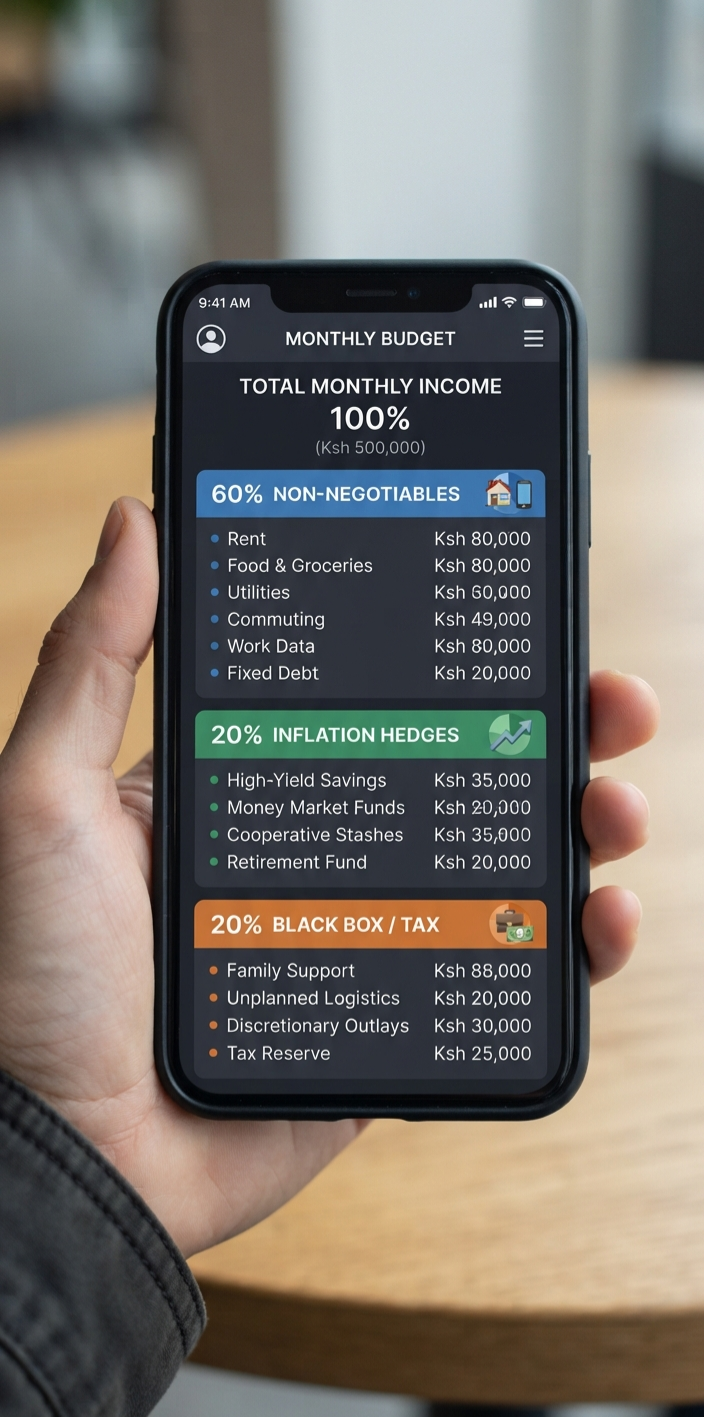
The Nigerian economic landscape demands a complete overhaul of traditional financial advice. In a climate where headline inflation hovers around 15.91% and food inflation remains elevated at 17.52%, conventional wealth-building techniques no longer suffice. When the price of everyday staples—such as tomatoes, yams, and beef—escalates monthly, holding onto idle cash guarantees a loss of purchasing power.
For beginners, surviving and thriving in this environment is not achieved through aggressive, restrictive deprivation. It requires strategic cash management, intentional asset allocation, and leveraging defensive financial instruments. This guide outlines a structured roadmap to budgeting, cutting costs, and saving effectively within the Nigerian economic context.
Why Traditional Personal Finance Rules Fail in Nigeria
Western-centric financial literature popularized frameworks like the 50/30/20 rule, which dictates allocating 50% of income to needs, 30% to wants, and 20% to savings. This formula assumes a stable economy with low single-digit inflation and predictable utilities. In Nigeria, multiple systemic factors render this framework obsolete:
- The Self-Provision Cost: Unlike environments where taxes fully cover basic public infrastructure, Nigerian citizens routinely self-fund alternative power (generators, solar installations), private security, independent water access (boreholes), and premium data subscriptions for work. These are not “discretionary wants”; they are functional necessities for generating an income.
- The Black Swan Supply Shocks: Frequent supply-chain disruptions, fuel price hikes, and global energy market shifts cause sudden spikes in transit costs. Because transport costs directly impact the distribution of agricultural products from northern farms to southern markets, grocery budgets can double unexpectedly within a single quarter.
- The Black Market and Currency Volatility: Parallel market exchange rate variations increase the landing cost of imported manufactured items, raw materials, and electronics. This triggers immediate price adjustments across domestic retail environments.
Acknowledging that your living costs are highly volatile is the first step toward building a bulletproof financial plan.
2. The Adapted 60/20/20 Budgeting Framework
Because fixed survival costs run exceptionally high, beginners must transition to an Adapted 60/20/20 Budgeting Rule specifically calibrated for inflationary pressure.
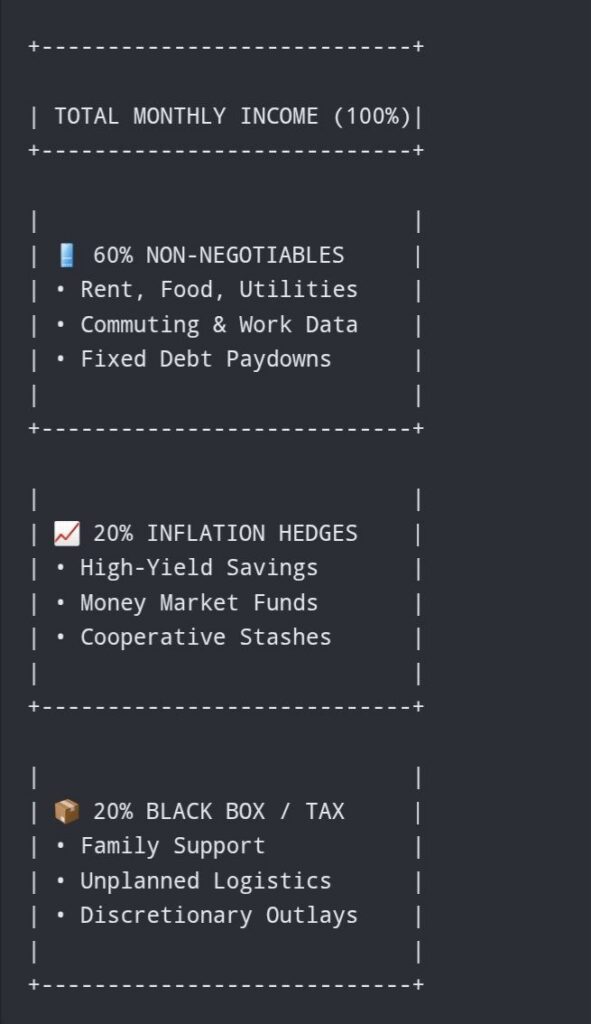
60% for Non-Negotiables
This segment covers baseline operational costs. It includes rent, food staples, essential medical care, commuting expenses, electricity tokens, and primary data plans. If these baseline items consume more than 60% of your current income, your living configuration is misaligned with your earnings. This scenario requires structured adjustments, such as moving to a shared apartment, minimizing long commutes, or finding alternative income channels.
20% for Inflation-Hedged Savings & Investments
This allocation must be deducted immediately upon receiving a salary or business payout—before any bills are settled. Placing these funds into standard bank accounts erodes their real value. Instead, channel this 20% directly into secure yield-bearing structures, automated fintech savings vaults, or liquid government bonds.
20% for the “Black Box” and Discretionary Spending
In Nigeria, omitting extended family obligations and cultural expectations from a budget guarantees its failure. This 20% functions as a combined buffer for social expectations (often called “black tax”), domestic emergencies, casual entertainment, clothing updates, and miscellaneous impulse events. Grouping these unpredictable outlays together prevents them from eating into your core savings or rent funds.
3. Advanced Cost-Cutting Strategies for High Inflation
When inflation drives up prices, conventional advice like “stop buying coffee” does not yield meaningful savings. Nigerian consumers must focus on higher-impact structural modifications to reduce monthly cash outflows.
Bulk Commodity Purchasing (The Collective Buy)
Buying food items individually from neighborhood kiosks or supermarkets carries a significant retail premium. Inflation drives up unit prices rapidly.
- The Execution: Partner with colleagues, neighbors, or family members to purchase core food staples in bulk directly from open-air major depot markets (e.g., Mile 12 in Lagos, Bodija in Ibadan, or Singer Market in Kano).
- The Value: Splitting full sacks of rice, beans, garri, and gallons of vegetable oil preserves substantial capital and locks in food costs before subsequent weekly inflation cycles. Non-perishable toiletries, soaps, and detergents should follow the same pattern.
Energy and Utility Optimization
With electricity tariffs subject to regular regulatory adjustments, power management directly affects your disposable income.
Actionable Steps: Switch all domestic lighting fixtures exclusively to low-wattage LED alternatives. Shift heavy-consumption activities—such as ironing clothes or pumping water—to periods when national grid supply is active rather than running personal fuel generators. If capital permits, investing in a basic solar inverter setup to run low-load electronics (laptops, routers, fans) will eliminate recurring fuel expenses.
Eliminating Subscribed Leakages and Digital Waste
Modern digital transactions introduce minor fee leakages that accumulate silently over a fiscal year.
Actionable Steps: Review your statement for recurring SMS notification fees, automated card maintenance deductions, and unutilized streaming platform subscriptions. Switch your primary transactional activities to digital banks that waive standard transfer fees and card maintenance levies. Track your daily expenditures using a dedicated ledger app or a structured physical notebook to identify leaks.
4. Where to Save: Choosing High-Yield Instruments
Saving physical currency or keeping money in a traditional checking account during an inflationary period is counterproductive. To protect your capital, select platforms that offer high interest rates, automated discipline locks, or exposure to stable foreign currencies.
Fintech Fixed Vaults
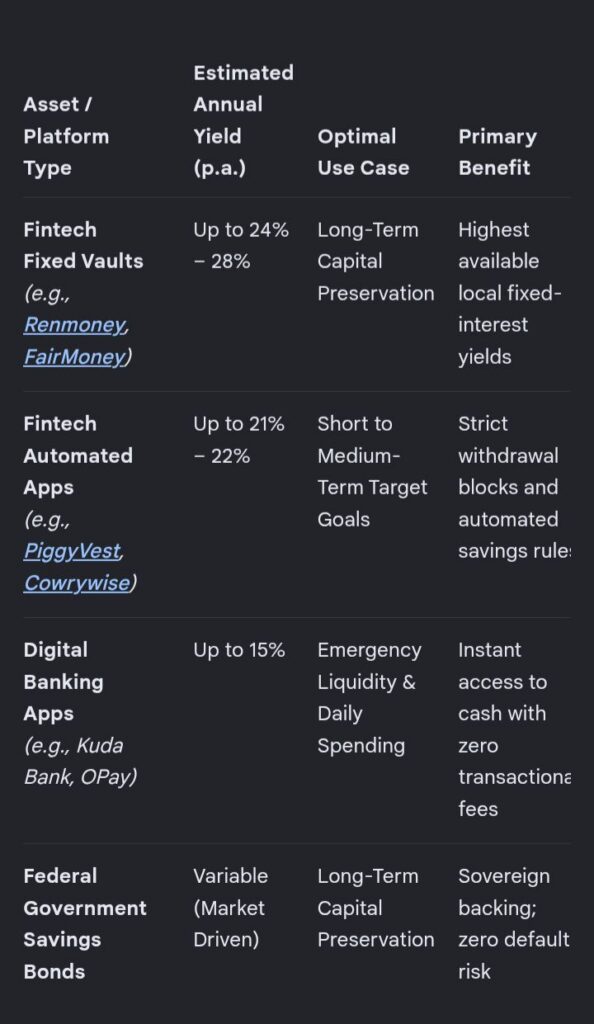
For intermediate goals like annual rent payments, capital should be locked away immediately. Platforms such as Renmoney and FairMoney offer competitive fixed deposit options yielding up to 24% to 28% per annum. Locking these funds prevents impulse spending while ensuring the nominal value grows fast enough to offset a portion of inflation.
Goal-Oriented Fintech Applications
Pioneering platforms like PiggyVest and Cowrywise are well-suited for building behavioural discipline. Features like SafeLock allow you to lock away funds for a set duration, removing the temptation to dip into savings for non-emergencies. Their automated features pull a set percentage from your account on salary day, removing human error from the saving process.
Low-Risk Government Securities
For beginners looking for institutional-grade security, the Federal Government of Nigeria (FGN) Savings Bonds offer an accessible entry point. While traditional Treasury Bills require high minimum investments, FGN Savings Bonds accept entry levels as low as ₦5,000. These instruments provide quarterly interest payouts and carry zero default risk, as they are backed by the federal government.
Regulatory Checklist for Beginners
- CBN Licensing: Confirm that the institution is explicitly authorized by the Central Bank of Nigeria.
- NDIC Insurance: Ensure the platform is covered by the Nigeria Deposit Insurance Corporation. This protects up to ₦500,000 of your deposits if the institution faces distress.
- SEC Registration: For platforms managing mutual funds or capital market investments, verify their status with the Securities and Exchange Commission.
5. Constructing a Bulletproof Emergency Fund
An emergency fund serves as your financial safety net during unexpected challenges. In an inflationary environment, an emergency fund should not be static; its target size must adjust alongside rising living costs.
- The Scale: Aim to save a minimum of three to six months’ worth of basic living expenses. If your monthly survival needs require ₦150,000, your target emergency vault should hold between ₦450,000 and ₦900,000.
- The Location Strategy: Never mix emergency savings with your everyday spending account. This capital requires an independent home that balances liquidity with growth. Split the fund into two distinct buckets:
- Tier 1 (30% Liquidity Bucket): Place this portion in highly liquid accounts, such as Kuda Bank’s regular savings pocket or OPay’s flexible wallet. This ensures instant access if a time-sensitive emergency occurs, like an urgent medical issue or immediate vehicle repair.
- Tier 2 (70% Yield Bucket): Place the remainder in a secure Money Market Fund or a short-term fintech fixed deposit. This portion earns a higher yield, preventing inflation from eroding your emergency safety net while it sits idle.
6. The Psychological Roadmap to Financial Discipline
Budgeting in a high-inflation environment can be mentally exhausting. Constantly rising prices can create a sense of financial anxiety, leading to a scarcity mindset or impulse spending out of frustration. Overcoming these psychological hurdles requires a shift in perspective:
- View Budgeting as a Tool for Freedom: A structured budget is not about restriction; it is a blueprint that gives you control over your income. It removes the stress of living paycheck to paycheck and provides clear guardrails for your spending.
- Automate to Remove Temptation: Relying entirely on willpower to save amidst rising costs is difficult. Automating your savings ensures your financial goals are taken care of before you have the chance to spend those funds elsewhere.
- Practice the 24-Hour Rule: Inflation can drive impulsive purchases out of fear that an item will cost more next month. For non-essential purchases, enforce a mandatory 24-hour waiting period. This buffer gives you time to assess whether the item is a genuine need or an emotional reaction to market pressures.
Consistency is the ultimate driver of financial success. Missing a monthly savings target due to an unexpected price hike is not a reason to abandon your plan entirely. Adjust your framework, protect your core capital using yield-bearing instruments, and commit to consistent, incremental progress.